

Achieving High Quality Maize Milling via Burt Machinery Design & Service
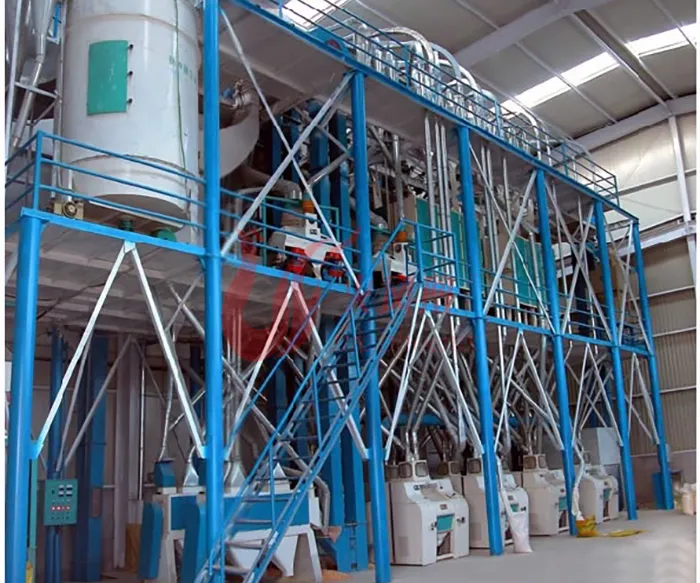
The Foundation of Quality: Integrated Design and Support
Building a high-performance maize processing plant requires matching a complex equipment ecosystem to the buyer’s specific site conditions. The ultimate quality and operational stability of any processing project are determined by how seamlessly design, manufacturing, setup, commissioning, and staff training are orchestrated right from the initial inquiry.
Burt Machinery organizes its project delivery pipeline to finalize facility layouts and equipment configurations long before the manufacturing phase begins. This engineering journey kicks off with a comprehensive feasibility study, analyzing site limitations, target daily capacities, and precise end-product specifications. By locking in these essential variables early, the engineering team develops a tailored layout that maximizes both physical space and material flow. This proactive methodology ensures that capacity targets and future expansion needs are fully addressed during the initial drafting stage. Consequently, subsequent phases like installation, system debugging, and worker training are executed with a solid baseline, forging a closed-loop system that drives consistent product quality and day-to-day reliability.
Aligning Capacity and Site Compatibility with Precision Inputs
A truly effective commercial milling operation requires highly accurate baseline data before any specific machinery is recommended. Formulating the ideal production line starts with gathering critical operational details: desired daily throughput, specific flour fineness, exact workshop dimensions, target product mix, local voltage standards, and packaging preferences. Without this foundational data, procurement teams risk acquiring equipment that fails to operate efficiently within their infrastructure.
Before generating a formal quotation, rigorous data collection minimizes the discrepancy between machinery capabilities and actual on-site realities. The available engineering scope covers a vast spectrum of operational demands. For emerging or regional markets, practical 5 to 50 tons per 24 hours configurations are perfectly suited for compact footprints. For massive industrial-scale demands, robust 100 to 200 tons per day production lines are deployed. Each capacity bracket demands a unique combination of automation, cleaning technologies, facility arrangements, and packing systems. By linking initial design inputs directly to these specific capacity models, the resulting plant avoids expensive mismatches in equipment scaling and final output expectations.
Ensuring Excellence Before the Grinding Stage
The superior quality of commercial maize flour is heavily dependent on the rigorous preparation the grain undergoes long before it reaches the roller mill. A comprehensive pre-milling process guarantees that impurities are eradicated, moisture is precisely balanced, and the germ is expertly extracted. Failing to remove stones, metallic fragments, or dust not only threatens food safety but also compromises the mechanical lifespan of the grinding equipment.
A well-configured production line seamlessly links multiple specialized stages. The journey usually begins with advanced storage and cleaning modules, where raw maize is processed through vibratory screens, magnetic separators, and destoners to purge foreign matter. Subsequent peeling, dampening, and degerming phases condition the grain for maximum extraction efficiency. In a typical 50-ton per day setup, these crucial preparation stages are tightly integrated with the milling, sifting, and packaging hardware. This systematic approach to early-stage cleaning and degerming prevents upstream processing flaws, safeguarding both total yield and the uniformity of the final flour.
Output Targets Drive Configuration and Layout Choices
Selecting the optimal plant configuration requires marrying target production volumes with the appropriate automation level and specific layout footprints. Customized milling lines must integrate these technical variables into a unified mechanical solution that serves the client’s distinct business objectives. An equipment layout intended for local mealie meal distribution will naturally differ from a highly automated line designed for premium industrial flour production.
For example, a 50-ton per day setup generally features an adjustable fineness capability of 40 to 200 mesh, alongside precise yield ratios for both bran and flour. These specific output metrics provide a transparent technical baseline for project acceptance and cannot be arbitrarily applied to other machine models. Conversely, high-capacity 100 to 200-ton per day systems utilize a modular, heavily automated workflow. These vast industrial lines seamlessly combine storage, intense cleaning, degerming, continuous milling, and quantitative stacking into one cohesive operation, perfect for continuous high-volume demands. By anchoring performance claims to specific configurations, the design phase guarantees that output goals are dependably met.
Unmatched After-Sales Support from Factory to Facility
The enduring success of a commercial milling plant is intrinsically linked to persistent technical support that starts at the factory and continues through daily operations. Comprehensive after-sales service is vital for maintaining smooth production, preventing costly downtime, and securing a rapid return on investment. Today’s procurement standards demand that machinery suppliers serve as long-term technical partners.
To guarantee reliability, all equipment is subjected to exhaustive testing and fine-tuning before dispatch. This strict pre-delivery quality control is bolstered by detailed operational videos and manuals, empowering installation teams with critical knowledge of startup and maintenance protocols. Once machinery arrives on-site, the support network expands significantly. Seasoned engineers are deployed to supervise overseas installation and provide in-depth worker training, ensuring local operators can run the plant safely and efficiently. Backed by a comprehensive one-year machine warranty and transparent terms for on-site services, this structured support framework provides buyers with absolute confidence in their operational continuity.
Designing Plants for Long-Term Commercial Success
The ultimate worth of a tailored grain processing project is measured by its capacity to deliver steadfast, long-term performance under rigorous commercial conditions. By fusing precise engineering design with exhaustive manufacturing, installation, training, and warranty support, the full equipment lifecycle is meticulously managed to ensure the buyer’s success. When equipment selection is dictated by exact site data rather than vague estimates, the completed facility operates with superior efficiency and minimal disruptions.
Procurement professionals can trust this methodical approach to convert raw material limits, building dimensions, and product targets into a highly optimized technical solution. Whether conceptualizing a compact 5-ton system or a fully automated 200-ton industrial complex, buyers should begin by detailing their capacity requirements, voltage specs, and workshop dimensions. To discover customized equipment configurations and initiate a tailored plant design, visit https://www.burtmachinery.com/
Hanzhong Burt Machinery Equipment Co., Ltd.
Burt Machinery
email us here
Visit us on social media:
LinkedIn
Facebook
YouTube
Legal Disclaimer:
EIN Presswire provides this news content "as is" without warranty of any kind. We do not accept any responsibility or liability for the accuracy, content, images, videos, licenses, completeness, legality, or reliability of the information contained in this article. If you have any complaints or copyright issues related to this article, kindly contact the author above.
